

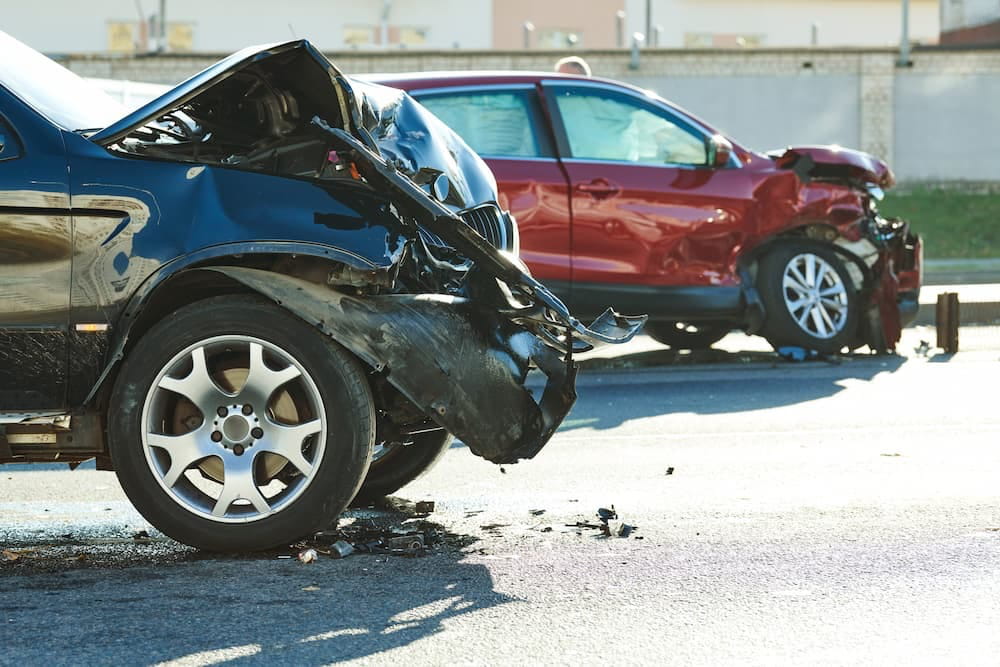
A car accident can leave you with more questions than answers. One of the most important concerns is determining who caused the crash.
Kentucky operates under a no-fault system for certain claims, meaning your own insurance is responsible to cover your initial medical expenses (up to $10k) regardless of fault. However, fault becomes critical when pursuing additional compensation beyond those benefits.
Understanding how to prove fault after a car accident is what separates those that recover all they are entitled to from the rest. McCoy & Sparks understands what to do to help you protect your rights from the start. Let’s walk through it.
This article explains how fault is evaluated in Kentucky and what types of proof can strengthen your position.
Key Takeaways
Proving Fault in a Kentucky Car Accident
Knowing how to prove fault after a car accident is what separates drivers who recover everything they are owed from those who do not. Here is what matters most in Kentucky.
- Kentucky is a no-fault state for your initial medical bills, with your own insurance covering up to $10,000 regardless of who caused the crash. Proving fault is what unlocks compensation beyond that.
- Fault comes down to proving wrongful conduct, usually negligence, meaning a driver failed to use reasonable care. More than one driver can share responsibility.
- No single item decides liability. Police reports, photos and video, witness statements, medical records, and vehicle EDR data work together to show what happened. In a police report, the content matters, not the officer’s conclusion.
- Missing evidence at the scene does not sink your claim. Request the police report, seek medical care, identify witnesses, and let an attorney pursue surveillance footage or expert analysis you could not gather yourself.
How Is Fault Determined After a Car Accident in Kentucky?
Fault is based on proof of wrongful conduct (negligence, wantonness, recklessness). In simple terms, negligence occurs when a driver fails to exercise reasonable care under the circumstances.
In Kentucky, liability is determined by reviewing all available evidence and assigning responsibility based on each party’s actions. More than one driver may share fault in certain situations.
Knowing how fault is determined after a car accident helps explain why documentation matters. The clearer the evidence, the easier it becomes to show what occurred and who contributed to the injuries.
What Evidence Can Help Prove Fault After a Car Accident?
Several things can support a claim. Each piece adds context and helps create a complete picture of the incident.
Common types of evidence for a car accident claim include:
- Police reports that document the scene and note any violations;
- Photographs that show damage, road conditions, and positioning of vehicles;
- Witness statements describing what occurred;
- Body Cam footage taken from officers cameras;
- Medical records connecting injuries to the collision; and
- Electronic data recorder (EDR) information taken from the vehicles involved;
- Video footage captured by traffic cameras or nearby businesses.
No single item determines liability. A combination of everything is used to tell the entire story.
Why Is a Police Report Important After a Crash?
A police report often serves as a starting point when evaluating liability. Responding officers gather information, speak with those involved, and record their observations. While police reports are important, they do not establish liability. The information contained in the report is what matters – not the officer’s conclusion.
For example, an officer could conclude driver A is at fault based on a statement from a witness. When video from a nearby business shows that the witness was wrong, the officer’s conclusion would be proven wrong. Hence, it is the content that is important in a police report, not the conclusion.
Reports commonly include:
- The date, time, and location of the incident;
- Statements from drivers and witnesses;
- Road and weather conditions at the scene; and
- Citations issued for traffic violations.
Although the report does not assign fault by itself, it can influence how insurers evaluate claims. Accurate documentation from law enforcement can strengthen your position.
At McCoy & Sparks, we look at the content and try to establish what really happened and what caused the injury.
How Do Photos and Videos Help Establish Fault?
Visual evidence can capture details that written descriptions may miss. Photos taken at the scene often show how the collision occurred and the conditions at the time.
Useful visual documentation may include:
- Damage to each vehicle,
- Skid marks or debris patterns,
- Traffic signals or signage nearby, and
- Visible injuries immediately after the crash.
Taking photos quickly helps preserve conditions that may change within hours. Clear images can reduce disputes about key details.
In some cases, it is important to canvas the area for video footage of the crash and/or the aftermath. Although this is often unavailable, if found, it can provide some of the best evidence of exactly how the wreck occurred.
Some tractor trailers are equipped with video cameras. We have used such information to establish liability in some highly contested liability cases.
Can Witness Statements Affect a Kentucky Car Accident Claim?
Independent accounts can provide valuable insight into how a crash occurred. Witnesses may notice details that drivers miss.
Statements from third parties may include:
- Observations about driver behavior before impact,
- Phone usage or other distraction,
- Details regarding right-of-way or traffic signals, and
- Descriptions of speed or sudden movements.
Because these individuals are not directly involved, their accounts are often viewed as neutral. This can make their input important when evaluating fault in a Kentucky car accident.
Why Do Medical Records Matter in an Injury Claim?
Medical documentation helps connect your injuries to the accident. While these records do not determine fault, they play a key role in demonstrating the impact of the crash. They sometimes contain admissions which can be relevant to establish fault.
Relevant medical evidence may include:
- Emergency treatment records,
- Diagnostic test results,
- Physician notes regarding injuries, and
- Ongoing care or rehabilitation plans.
Consistent treatment records show that injuries required attention and were not unrelated to the incident. Remember under Kentucky law, you must establish that the injury and treatment was related to the accident. The medical records are often the best source for this proof.
What Happens If You Do Not Have Enough Evidence?
Leaving the scene without gathering documentation is common, especially after a stressful event. A lack of initial proof does not mean your claim cannot succeed. Start gathering the evidence when you are able to do so.
Here are some steps to strengthen your case:
- Request a copy of the police report,
- Seek medical care and document all symptoms,
- Identify potential witnesses after the fact,
- Preserve any communication related to the accident, and
- Speak with a Kentucky car accident lawyer (McCoy & Sparks) who can investigate further.
An attorney may locate additional evidence, such as surveillance footage or expert analysis that was not immediately available.
How Can Evidence Affect the Outcome of Your Claim?
The strength of your evidence can influence both liability and compensation. Clear documentation often leads to faster resolutions and more accurate evaluations of damages.
Weak or incomplete proof may result in disputes or reduced settlement offers. Insurance companies frequently rely on available evidence to determine how much responsibility to assign.
Understanding how to prove fault after a car accident allows you to approach your claim with greater confidence and preparation.
Moving Forward After a Kentucky Car Accident
Recovering after a crash involves both physical healing and careful decision-making. Knowing what evidence to prove fault after a car accident can strengthen your position and help you avoid unnecessary setbacks.
At McCoy & Sparks, our attorneys have spent nearly eight collective decades helping individuals across Kentucky navigate injury claims with confidence. Our team understands how evidence can shape the outcome of a case and is committed to guiding clients through each step. If you need support after an accident, we are here to help you understand your options and protect your rights.
Frequently Asked Questions
What Evidence Is Most Important After a Kentucky Car Accident?
No single type of documentation is always the most important. Police reports, photos, witness statements, and medical records all contribute to a strong claim. Combining multiple forms of proof creates a clearer picture of the incident.
Can a Police Report Help Prove Fault in a Kentucky Car Accident?
A police report can support your claim by documenting important details. While it does not determine liability on its own, insurers often rely on it during their review. Accurate reports can strengthen your position.
Do Photos and Videos Help Prove Fault After a Crash?
Images can show vehicle damage, road conditions, and other details from the scene. These elements may help clarify how the collision occurred. Visual documentation often reduces disputes.
Can Witness Statements Affect a Kentucky Car Accident Claim?
Witnesses may provide an independent account of events. Their observations can support your version of what happened. Neutral perspectives can be valuable when liability is disputed.
What Should I Do If I Do Not Have Enough Evidence After a Car Accident?
You can still build a claim by gathering records and seeking legal guidance. An attorney can help identify additional sources of proof. Acting quickly improves the likelihood of locating useful information.
Official Legal and Other Sources
To ensure the accuracy and clarity of this page, we referenced official legal resources during the content development process: